Vulnerability Research
The Rise of AI-Powered Phishing: Why Humans Are the New Firewall
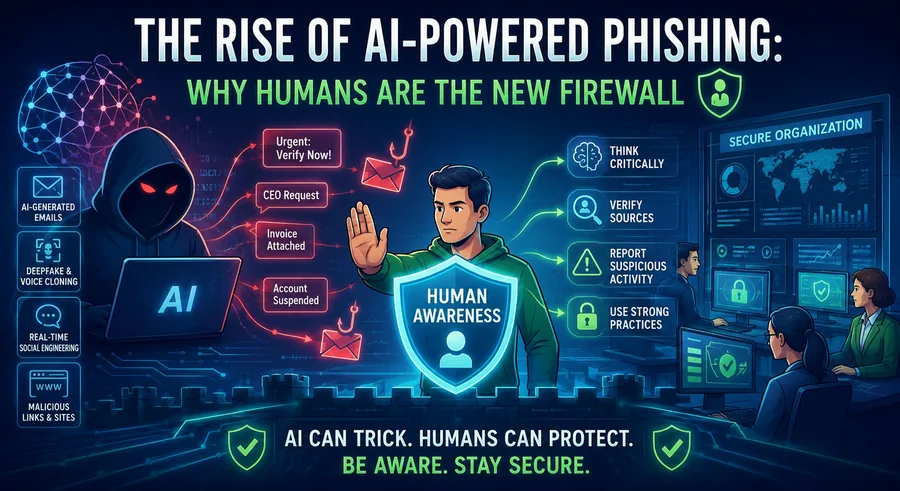
Cybercriminals now use AI to generate realistic emails, clone voices, create fake video messages, and even imitate executive communication styles. Traditional password-based security is struggling to keep up with these evolving threats.
AI Has Made Phishing Smarter
Generative AI tools can analyze public profiles, company websites, and social media activity to craft highly targeted phishing attacks. Instead of generic “Your account has been compromised” messages, attackers now send emails that look like real conversations from managers, coworkers, or trusted vendors.
Security researchers have also warned that attackers can create fake login portals within seconds using AI-powered website generators.
This means employees are no longer fighting obvious scams — they are fighting professionally engineered deception.
Why Passwords Alone No Longer Work
Even strong passwords can fail when users unknowingly hand them over to attackers. Cybersecurity experts increasingly agree that the future lies in passwordless authentication, phishing-resistant MFA, and Zero Trust security models.
Zero Trust operates on a simple principle:
Never trust, always verify.
Instead of assuming users inside a network are safe, every login attempt, device, and access request must continuously prove legitimacy.
Humans Are Becoming the First Line of Defense
Technology alone cannot stop modern phishing attacks. Organizations must build a culture of cyber awareness where employees can identify manipulation tactics, suspicious requests, and social engineering attempts.
Security training should now include:
AI-generated phishing awareness
Deepfake voice scam detection
Verification protocols for financial approvals
Passwordless authentication adoption
Continuous identity verification practices
Companies that combine employee awareness with Zero Trust strategies are far more resilient against modern cyber threats.
The Future of Cybersecurity
Cybersecurity is no longer just about protecting devices — it’s about protecting identities. As AI continues to evolve, businesses must shift from reactive security to proactive verification.
The future belongs to organizations that assume attacks will happen and prepare accordingly.
Because in the age of AI-driven cybercrime, the strongest firewall may not be software at all — it may be human awareness.